Showing posts with label AMERICAN CHESS FOUNDATION. Show all posts

Monday, June 15, 2009

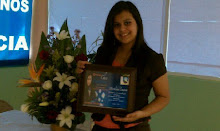
AN IN-DEPTH INTERVIEW WITH WCM CLAUDIA MUNOZ - PART I (THE BEGINNINGS)

These are a series of interviews that we will be posting everyday in order to provide our readers with an in-depth understanding of who this 11-year old, 5th grader, WCM Claudia Munoz really is and where she planning to go in the future.

Today, we will start with her beginnings:

1. How old are you and in what grade do you attend school?

First of all, hi my name is Claudia Munoz and before I start this interview I want to thank God for the talent of playing chess that He has given me. I also want to thank my parents for supporting me in chess. By the way, I am 11-years old and a 5th grader.

2. Do you always have the habit of thanking God before an interview?

Yes, because He has given me a talent and I always thank Him for doing so.

3. Where do you live and where do you go to school?

I live in Ciudad Acuña, Mexico, which is the border city with Del Rio, Texas and I am homeschooled but not Mexican homeschooled but rather American homeschooled. Our educational program is from the United States and my homeschooling is in English. I take the same classes that a 5th grader in Texas studies.

4. What language do you primarily speak at home?

English. I had to learn Spanish when we arrived in Mexico. I have also been studying French with my father.

5. What do your parents do for a living in Mexico?

My parents own a foreign language center that provides educational service for American companies in Acuña.

6. Where were you born?

In Wichita Falls, Texas.

7. How old were you when you moved from Texas to Mexico?

I was 5-years old.

8. Do you go often to visit the U.S.?

Yes, every Thursday because we joined our home school network to meet my Physical Education requirements, then we to go to the Valverde County library.

9. How about deep in the U.S.?

Numerous times during the year. I go to Bible camp in the summers in Byers, Texas. I also spend about one month out of the twelve visiting family in Wichita Falls, Texas, besides playing in tournaments in Texas.

10. Where did you learn how to play chess?

In Acuña, Mexico.

11. How taught you how to play chess?

My father.

12. How old were you?

I was 6-years old.

13. How long before you started competing after you learned?

A few months after I learned.


Tomorrow we will continue with a longer series of questions.

Saturday, June 13, 2009

CHESS ON THE RISE IN U.S. SCHOOLS

Getting a group of third, fourth and fifth graders to sit quietly is considered by some to be an impossible task. But all Ross Pancoast has to do to get his class of about 20 students at Beverly Farms Elementary School in Potomac, Md., to focus is set up a few chess boards.

Once he brings out the clocks, black and white pieces, and score sheets, the typical classroom commotion turns to silence.

Pancoast, who teaches chess before and after school at about nine schools in Montgomery County Md., says he's seen a "resurgence" of the game in the school system.

And it's not just a local phenomenon. Over the past few years scholastic chess, or chess for educational purposes, has taken U.S. schools by storm.

"We're seeing more of these (chess programs) across the country, especially as more and more educators are seeing the impact of the chess program on their students," says Jerry Nash, scholastic director of the U.S. Chess Federation.

This increased interest can be seen in the number of young people competing in chess at high levels. This week the nation's top chess players are gathering in St. Louis to compete in the "Super Bowl" of chess — the U.S. Chess Championship. Of the 24 players vying for the $200,000 prize, four are under the age of 21, including 14-year-old Ray Robson of Largo, Fla., the youngest player in the competition.

Wendi Fischer, executive director of America's Foundation for Chess, says she's seen a "huge increase" in the number of schools and students interested in chess. The foundation teaches second- and third-grade teachers how to use chess as a learning tool, through a program called First Move.

When the program started in 2003 it was in one state, serving about 1,500 kids, but by 2008 First Move expanded to 26 states, to serve about 50,000 kids.

Fischer says the aim of the program is to teach critical thinking skills that will help students succeed academically and socially.

"In the very first lesson we study board basics. One of the basics of the chess board is that it uses a coordinate system, and the coordinate system is the basis of algebra."

Marlie Buehler is the founder of Abundant Waters, an after-school program that operates out of PS 51 in New York. She says chess is one of the activities that is part of the program, adding that it teaches children many important skills, including how to take notes.

"I firmly believe everybody should have to take it," she says. "It's teaching the mind how to think."

While chess isn't required in most schools across the country, Nash says there are programs in every type of school, including inner-city schools, private schools and home schools.

He says the universal nature of chess is the reason for its popularity. "Chess is an equalizer — it doesn't depend on your size or age. Plus it's a very inexpensive game to play."

Pancoast says parent demand is a large part of the reason chess programs have become a staple in many schools. When Pancoast's father, Omar, started the C&O Family Chess Center about seven years ago, there were so many Parent Teacher Associations asking for programs in their schools that Omar brought Ross on to meet the demand. Now they work with about 25 schools around Maryland.

"I think that parents are starting to see chess as an extracurricular activity that has some benefits other than just learning how to play chess," he says. "It sort of carries over into other aspects when it comes to logical thinking and process of events."

Rex Sinquefield, founder and president of the St. Louis Chess Club and Scholastic Center, which is hosting the tournament, says one of the main reasons scholastic chess is becoming so popular is that there's an interest on the part of the top chess players to get kids involved in the game.

Sinquefield's group is working on a study of how kids benefit academically from chess. "It's definitely an exercise of the brain. They also learn that you can improve by studying and that you go to books to learn."